
Where’d Our Traffic Go?
Understanding SEO Shifts and What Your Business Can Do to Recoup the Losses

Contributing Author Andrew Barks
Organic website traffic has long been, for better or worse, the default barometer by which companies measure not only their SEO strategies, but marketing success.
The more traffic you’re getting, the better your visibility must be, the theory went.
As long as traffic numbers remained relatively consistent - and sales figures followed suit - most execs weren’t too concerned with factors like user intent or channel segmentation. People arriving at your site was a net positive result, regardless of what they did once they got there.
Especially for B2B services like solar, the user’s “journey” was of less concern than their simple presence. The click was it.
But somewhere between ChatGPT’s launch and Google’s rollout of AI Overviews, things started to shift. It just took many businesses time to notice - let alone understand why.
AI Search Has Flipped the Site Traffic Dynamic
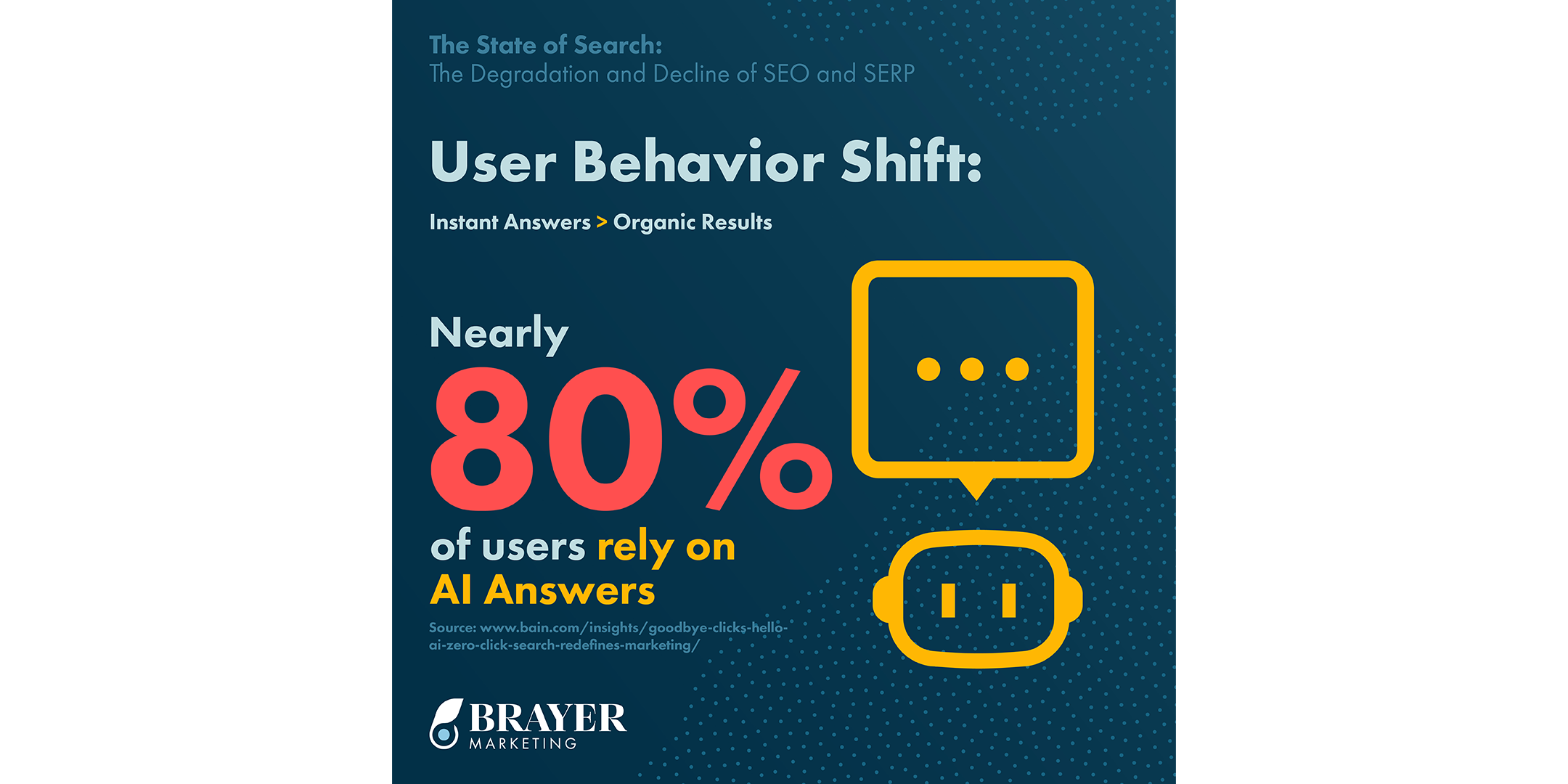
The Zero-Click Internet is no longer just a theory. If users feel they can find all the information and resources they need about your business from ChatGPT search (or another large-language model), why would they bother proceeding any further?
AI browsing is the latest - and most disruptive - innovation in a chain of changes that started years ago with something as seemingly innocuous as Google tweaking the color of its in-line ads. Those adjustments, while subtle, opened the revenue floodgates.
Only now, Google no longer holds the keys. When it doesn’t monopolize the browsing experience, Google can’t influence traffic with nearly the same level of predictability. And thus, the entire discipline of Search Engine Optimization is changed.
During the dog days of the Summer of 2025, HubSpot posted a blog titled “Did HubSpot Really Lose 80% of Blog Traffic?” It was significant in that the marketing giant was admitting, out loud, that it was dealing with the same issues as everyone else, albeit on a grander scale. It was both reassuring and terrifying for marketers at smaller businesses to know that, if it can happen to HubSpot, it can surely happen to you.
It forced many executives and business leaders to admit what most marketers have known all along: Traffic is, by and large, a vanity metric. What visitors need from (and do on) your site is far more important in terms of your marketing success.
It also served as confirmation that companies needed to start investing - if they hadn’t already - in alternative search.
The State of Search (as of Q2 2025)
From SEO degradation to Google’s deteriorating SERP results and its algorithm favoring Ads and AI-generated results, these factors are converging and redefining digital marketing, significantly impacting key metrics that have traditionally indicated success and well-allocated budgeting ROI:
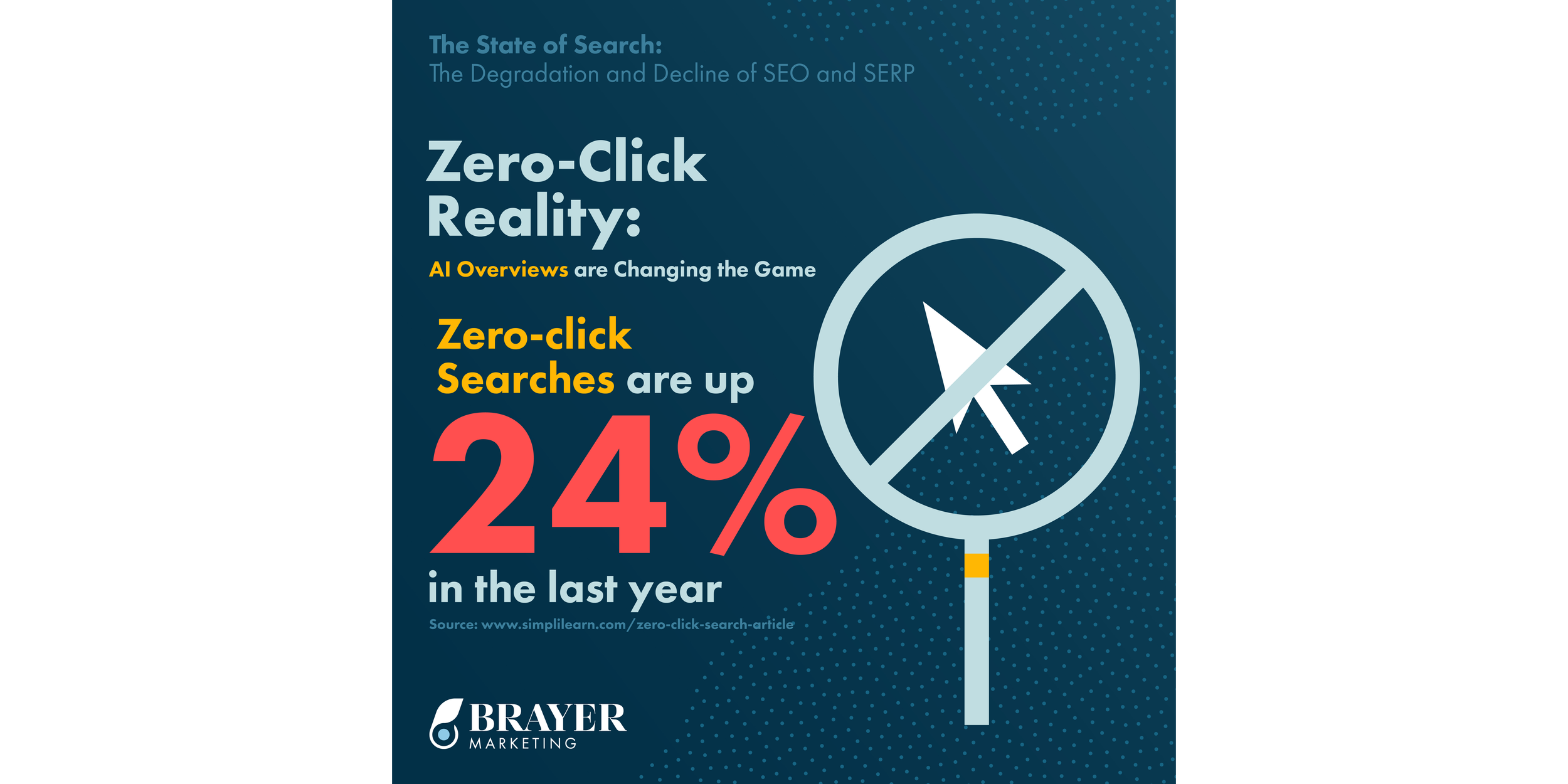
Zero-click searches on Google grew from 56% to nearly 69% since AI Overviews launched in May 2024.
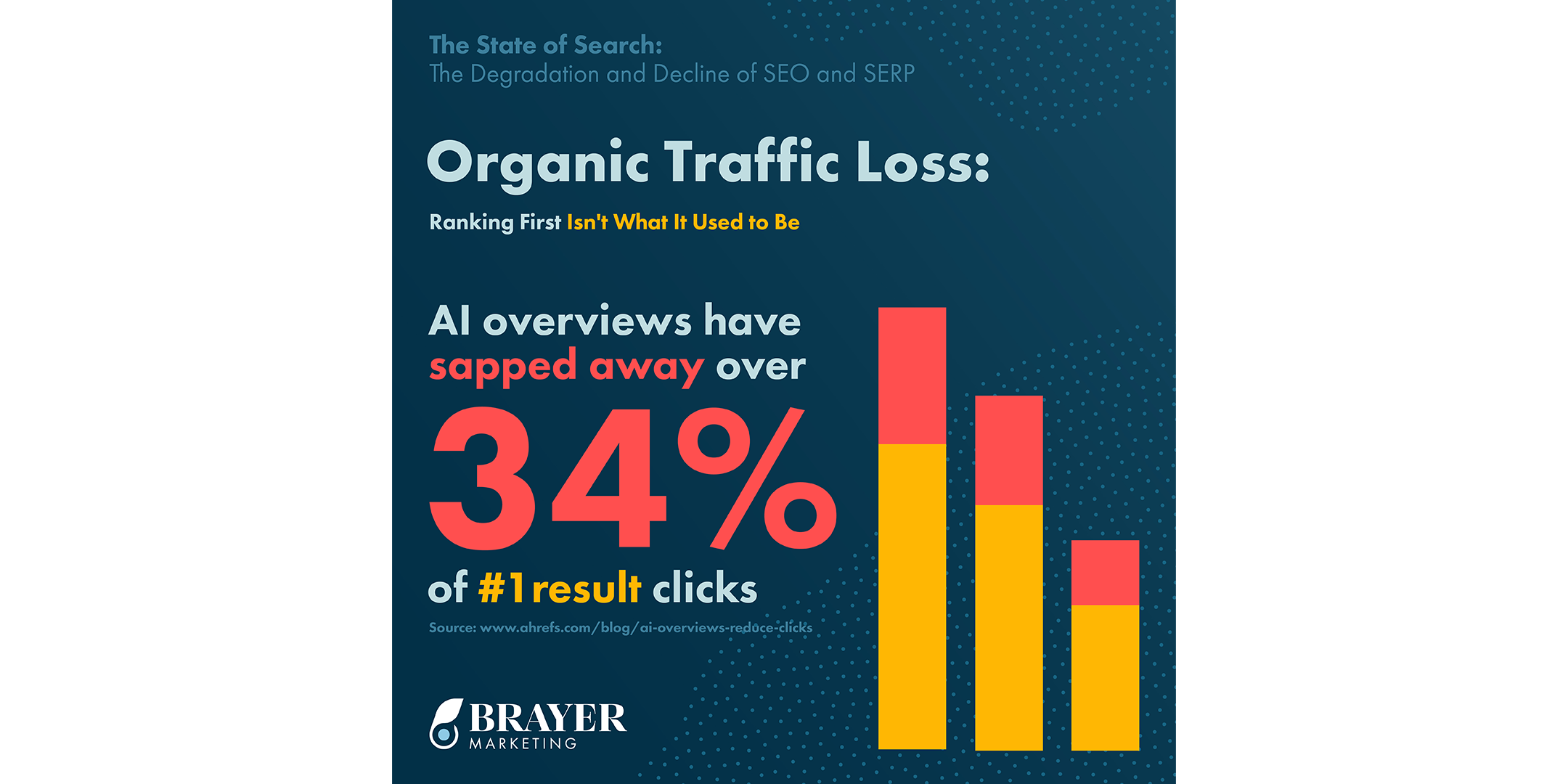
When AI Overviews appear in search results, the first organic link loses an average of 34.5% of clicks.
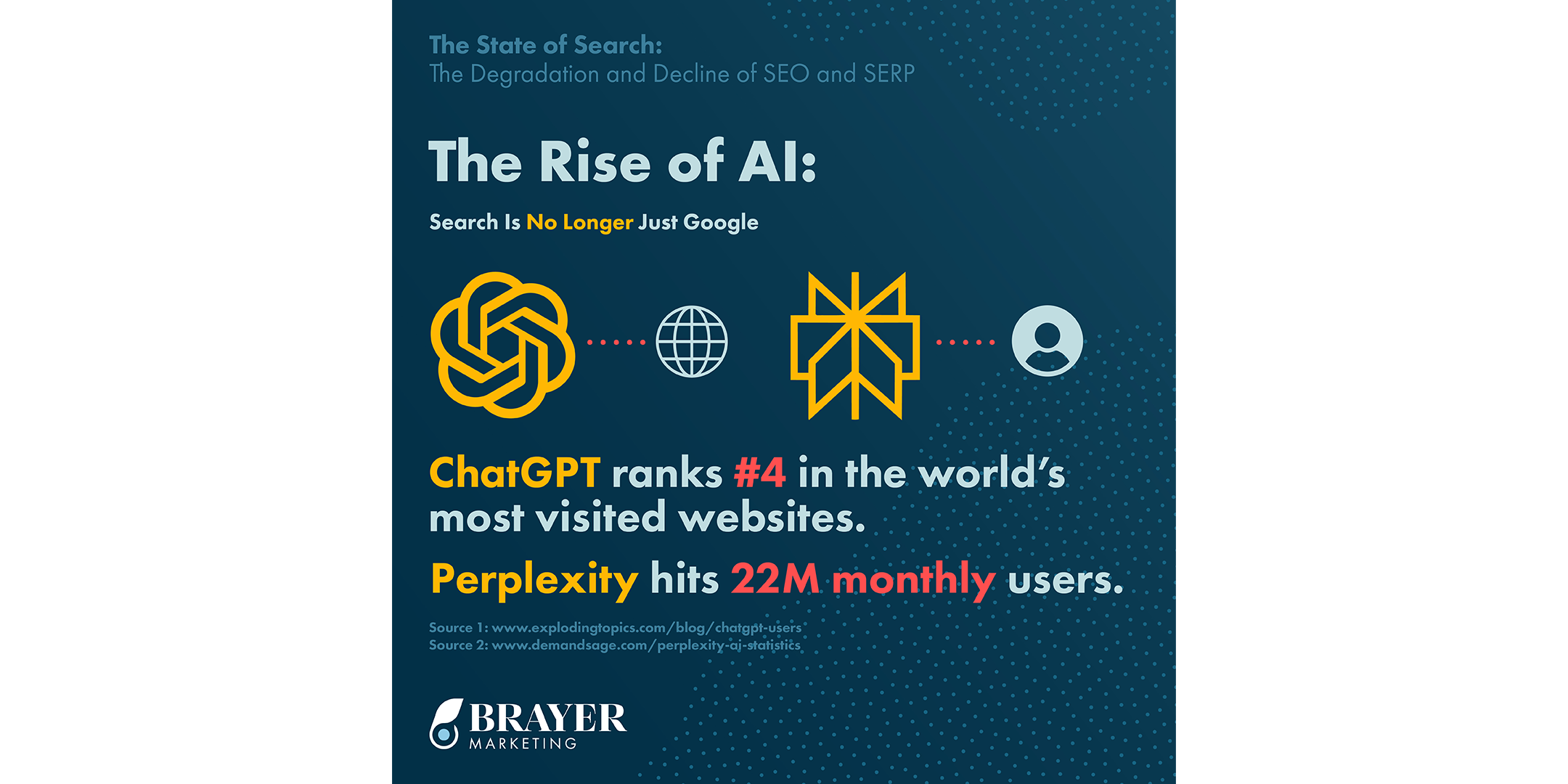
Meanwhile, AI platforms are surging in popularity (ibid.).
ChatGPT saw a 44% traffic boost in November 2024.
Perplexity reached 15 million monthly users in late 2024.
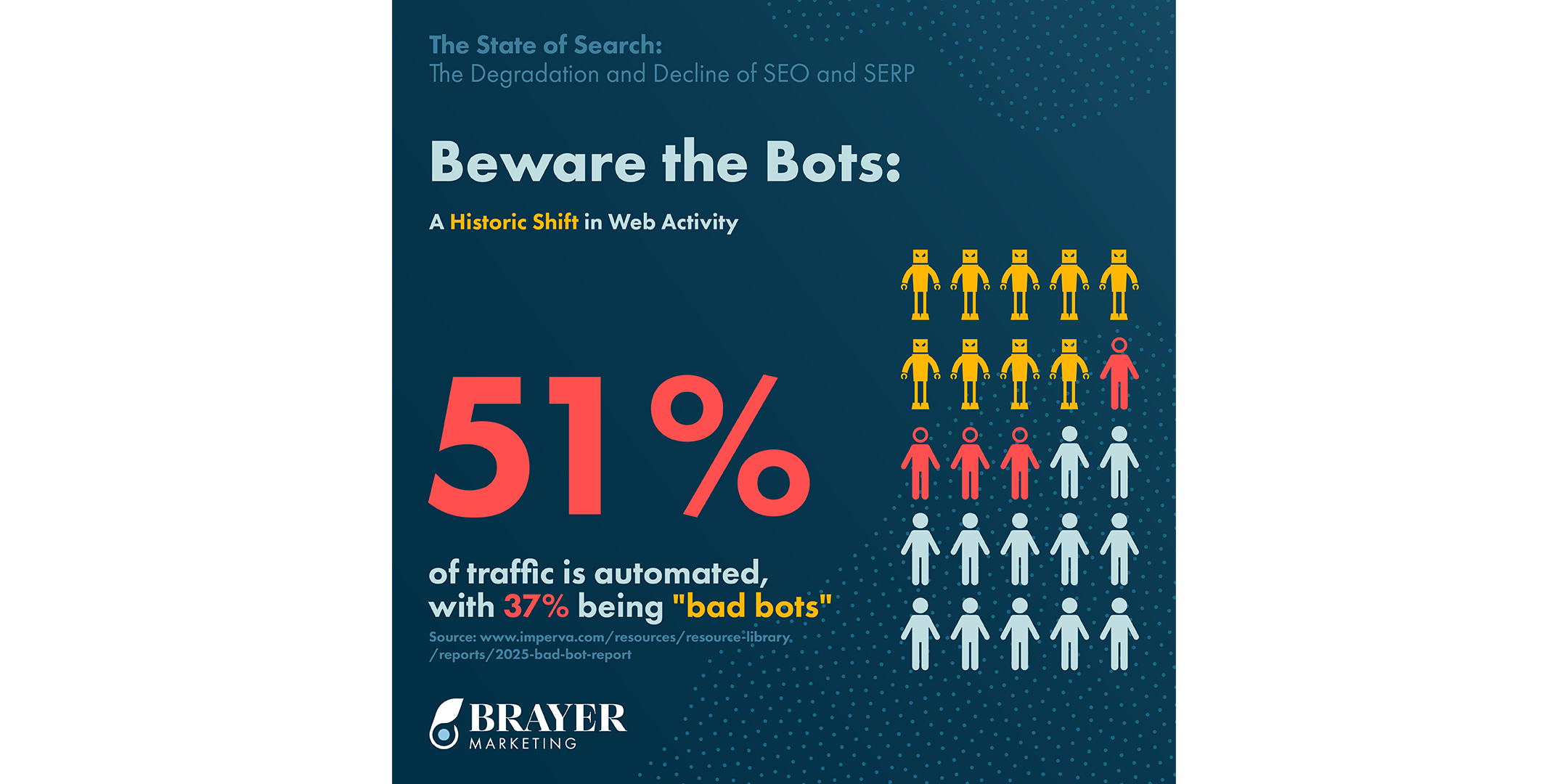
For the first time in more than a decade, automated traffic (51%) has surpassed humans (49%) in online activity.
“Bad bots” now comprise 37% of all internet traffic.
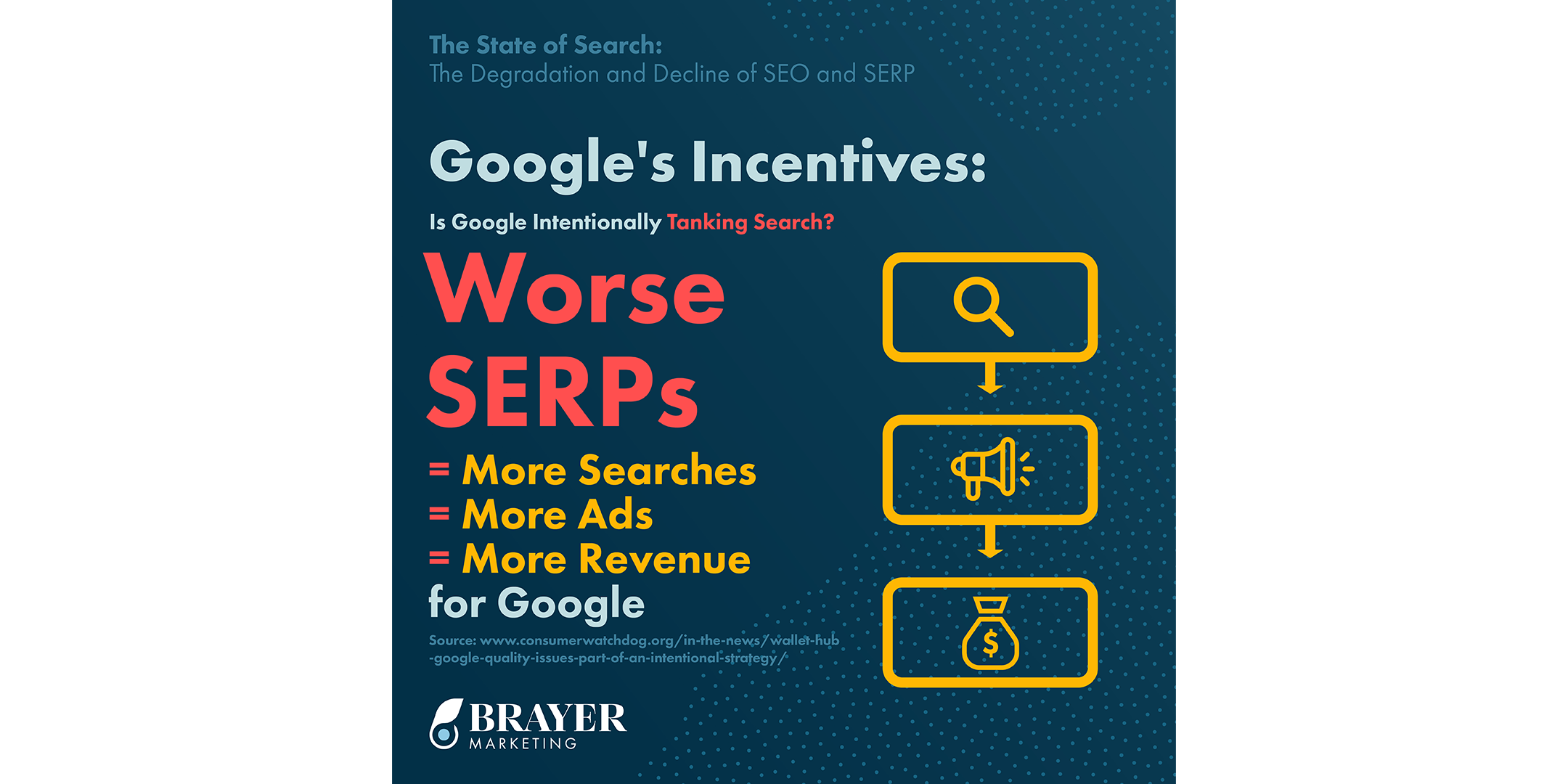
On top of these disruptions, there’s growing evidence that Google is intentionally tanking Search to favor Ads because a worse SERP means more time spent searching on Google, leading to more ad impressions, and therefore, more ad revenue.
Plus, new SERP features keep taking up more real estate.
What Your Business Can Do About It
Winning in alternative search may be a bit of a misnomer. You won’t rebuild your business’s traffic pipeline the same way you “won” in traditional search. Results aren’t sorted the same way; there isn’t a Page One you can refer to as the bellwether for visibility and impact.
Instead, alternative search presence largely comes down to the consistency of messaging. If your business has any sort of web presence, it will show up in AI search. What’s important is how you show up - a matter that depends on how your brand is represented across a myriad of channels parsed, summarized, and surfaced by AI algorithms.
1. Create Natural-Language Content Built for AI Search and Social Discovery
Whereas Google has traditionally only crawled content, seeking the best sources to satisfy a keyword or query, AI crawls and summarizes it. That means the content it surfaces on a given topic won’t necessarily be the most authoritative, but that built on natural language and topical depth.
Simple structures (think: FAQs, content clusters, bulleted sections, and tables) will win the day moving forward. Generative AI prefers to cite sources it can quote and/or easily summarize. So incorporate Q&As, statistics, and definitions into your site content - even if it may feel elementary - so yours is the best source to pull from, as opposed to the best link to click.
2. Take a Network Approach, Spinning Content for Each Channel
In marketing parlance, we call these tables content “flywheels.” But that’s a fairly meaningless term for most people running their own business.
What does that actually mean? Especially for a business with limited marketing resources, efficiency is essential. Spinning each piece of content (say, a blog post) into consistently branded pieces for different channels (a video, a Reddit thread, a LinkedIn post, and ultimately, an AI-sourced answer) may not be feasible.
Think about each channel in terms of how it’s discovered and how it amplifies your brand voice. Rethink the traditional “top of funnel” as searchable channels, and then focus your energy on the ones where your audience lives.
| Searchable Channels | Discovery Use Case | Ideal Content |
| YouTube | How-tos, tutorials, etc. | Video explainers |
| Meta | Hacks, trends, storytelling | Demos, reels, carousels |
| Industry POVs & insights | Newsletters, thought posts | |
| AI Search (i.e., ChatGPT) | Research, decision support | FAQs, reviews, blog hubs |
| Peer advice, objections | Behind-the-scenes answer |
Consider deeper-funnel channels as your amplifiers, or extensions of your brand voices:
| Amplifier Channels | Discovery Use Case | Ideal Content |
| Trust, nurture, engagement | Curated digest & tips | |
| Webinars | Live interaction, education | Workshops, demos, Q&As |
| Earned Media/Placements | Authority & third-party trust | Opinions & thought pieces |
3. Consider User-Generated Content as a Piece of Your Marketing Puzzle
Returns may vary here, based on your industry, but also your network, resources, and of course, your audience. User-generated content only works where your buyers might be.
If your solar panel buyers aren’t on TikTok, there’s not much payoff in partnering with creators who are prominent there. But perhaps they’re on Facebook for Business, and while they’re there, they peruse content from people they trust.
User-generated content is laying bare a truth we’ve known for a while now: Buyers generally trust people more than they trust brands.
Any business can find a key takeaway in that truth. To stand out in AI search, you’ll eventually want more control of the narrative around your brand. That visibility is, for better or worse, increasingly people-powered.
Longer term, that means you might want to encourage user-generated boosts for your content: Partner with people your audience trusts to help explain your products and services, lead walkthroughs, or even repurpose webinar and podcast clips in smaller, more digestible moments.
4. Personalize Your Brand Through Human Engagements and Powerful Storytelling
As we noted above, buyers generally trust people more than they trust brands.
Although personalizing a brand seems like an easy task, it can be deceptively complicated and become a resource black hole, especially for companies in the B2B space, like OEMs or enterprise solution providers. Thought leadership campaigns aim to fill this niche, but they often rely on individual executives or subject matter experts, rather than personalizing the company’s brand.
The future of search will be fueled by social and community channels using content with strong messaging and powerful storytelling. Repetition and trust will serve as the new currency for brand awareness - and when it comes to AI visibility, that’s often as good (or better) as direct traffic to your site.
Navigating this new search landscape requires more than incremental SEO tweaks. It demands a fundamentally different approach to visibility, messaging, and measurement. That’s where Brayer Marketing comes in. We help businesses move beyond traffic-as-a-metric thinking and build sustainable discovery strategies for AI search, social platforms, and human decision-making. From natural-language content engineered for AI summaries to multi-channel brand consistency that algorithms can’t ignore, our work is built for how people actually find and evaluate businesses today.
Ready to Future-Proof Your Visibility?
If your analytics are telling a story of declining organic traffic, but your business still needs to grow, it’s time for a new playbook. Brayer Marketing is ready to help you audit what’s broken, identify where opportunities live, and build a strategy aligned with the future of search, not the past.
Reach out today and let’s talk about how your brand shows up next, and how to make sure it shows up strong.